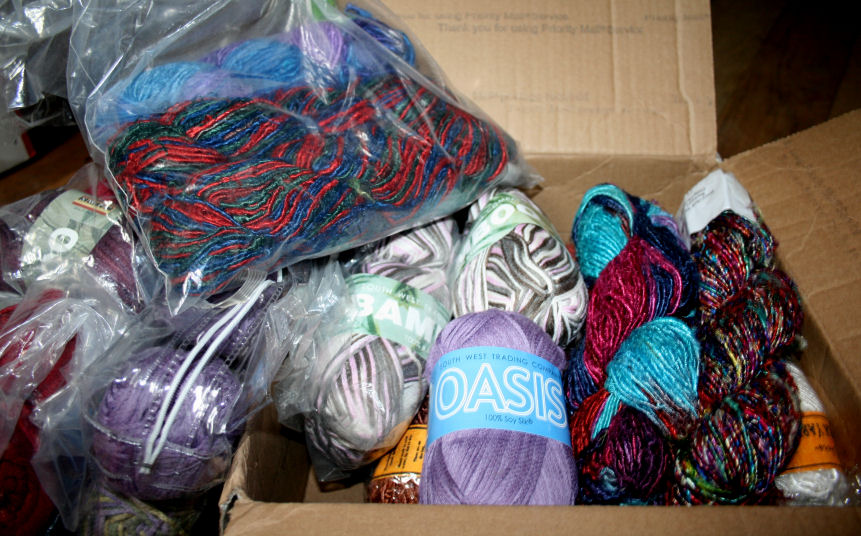
 I was so sad the other week when I found out my favorite online yarn store Knit For Brains had closed down, but I scored big when I wrote the owner and asked if there was left over inventory I could still buy!! I got everything at wholesale and under prices - wooo hooo! My fellow crochet and knitters will know this is like the kid in a candy store, all those colors, all the soft silky feel, all the cool ass projects I can make now.
And everything is 100% natural fiber, there are no fugly and creepy feeling acrylic yarns in this box, no chemical fibers. Some of these yarns are made from things that people would never expect, so I thought I would share a lil' bit about why buying these eco yarns is better and show ya how beautiful they look too...
 1. Banana Silk Yarn (also known as banana fiber yarn) ::::
This eco savvy yarn is in a category all it's own. It is rarely heard of, rarely seen at yarn stores and has a look & feel that is utterly unique to the fiber. And I LOVE IT! It really does have that natural sheen to it.
*
"Banana Silk fiber yarn is made from the fiber of the banana tree. Only the decaying outer layers of the trees (aged bark) are harvested and soaked under water to quicken the natural process. When all of the chlorophyll structures are dissolved, the cellulose fibers remain. They are extruded into pulp and to make it suitable for spinning into yarn." -shangri la crafts
"Banana Silk fiber yarn is made from the fiber of the banana tree. Only the decaying outer layers of the trees (aged bark) are harvested and soaked under water to quicken the natural process. When all of the chlorophyll structures are dissolved, the cellulose fibers remain. They are extruded into pulp and to make it suitable for spinning into yarn." -shangri la crafts
 2. Soy Yarn (also known as Soy Silk Yarn) :::
I love soy yarn. It's so awesome one time my cat ate some of it like she was Lady and the Tramp slurping up pasta at a romantic dinner. It has a super silky, slippery feel and works great for delicate, luxurious projects. I like to make necklaces with this yarn, and one time I even made a pair of panties... it is the perfect feel to make lingerie.
*
"Soy is the ultimate sustainable fiber -- it's made from discarded tofu! Leftovers from tofu manufacturing are gathered up, liquefied, and extruded through spinnerets to create filaments which are then spun into fine yarns. The process is very similar to how bamboo fibers are spun. Henry Ford first investigated the use of soy in textiles for his automobiles in the 1940's, but the arrival of synthetics on the scene caused this effort to fade away." - fiber organics
 3. Bamboo Yarn ::::
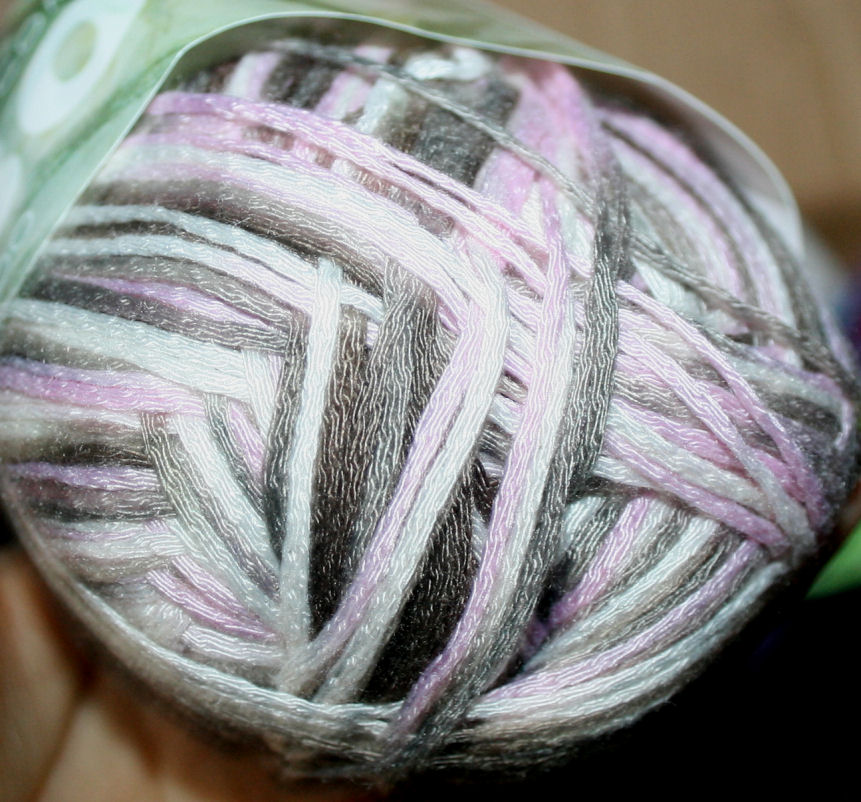
The above bamboo yarn color is awesome... it's called GIRLIEFLAGE! A girl camo yarn that comes out in a cute camo-ish pattern. I have never gotten to use the bamboo yarn yet but it seems similar to the soy yarn and it is certainly soft to touch with a sheen to it. I don't have to use it to know I already love it and plan to make alot of necklaces with this yarn!
*
"In order to make bamboo into yarn, the stalks are liquefied and then extruded by machine through spinnerets into threads, which are then spun into yarn. The process is similar to how rayon is made, so sometimes bamboo textiles are referred to as "bamboo rayon" or "bamboo viscose". Other cellulosics (fibers derived from cellulose) such as lyocell (made from wood pulp) and modal (made from beechwood) are processed this way also.
Some people are concerned about the production of bamboo textiles because the process uses caustic soda (sodium hydroxide), which is dangerous in large quantities. Some suppliers work closely with manufacturers to ensure that the fabrics are made with minimal environmental impact. They use advanced wastewater treatment systems and have strict controls on exhaust emissions."
- Fiber Organics
Some people are concerned about the production of bamboo textiles because the process uses caustic soda (sodium hydroxide), which is dangerous in large quantities. Some suppliers work closely with manufacturers to ensure that the fabrics are made with minimal environmental impact. They use advanced wastewater treatment systems and have strict controls on exhaust emissions."
- Fiber Organics
*
4. Organic Cotton Yarn ::::
4. Organic Cotton Yarn ::::
I didn't buy any this go around... but I know it's good stuff! here is what it takes to make the fiber....
"◦uses untreated seeds (no insecticides or fungicides)
◦never uses genetically modified seeds
◦builds strong soil through crop rotation, rather than relying on synthetic fertilizer
◦physically removes weeds rather than relying on herbicides
◦uses beneficial insects and lure crops to manage pests
◦relies on seasonal freezes to remove foliage from cotton, rather than chemicals
◦must be processed separately from conventional cotton, including separating the fiber from the seed, spinning, knitting and sewing
◦if bleached, hydrogen peroxide is used rather than chlorine
◦dyes used are the least harmful possible (to people and planet), and may include low-impact, fiber-reactive, and natural dyes " -Fiber Organics
◦never uses genetically modified seeds
◦builds strong soil through crop rotation, rather than relying on synthetic fertilizer
◦physically removes weeds rather than relying on herbicides
◦uses beneficial insects and lure crops to manage pests
◦relies on seasonal freezes to remove foliage from cotton, rather than chemicals
◦must be processed separately from conventional cotton, including separating the fiber from the seed, spinning, knitting and sewing
◦if bleached, hydrogen peroxide is used rather than chlorine
◦dyes used are the least harmful possible (to people and planet), and may include low-impact, fiber-reactive, and natural dyes " -Fiber Organics
*
5. Wool Yarn ::::
Wool can mean alot of things, there is sheep wool, alpaca wool, llama wool... but being a wool fiber does not mean it was processed in an environmentally sensitive way. Here is what is takes to do it right...
"◦the sheep are not genetically modified or given synthetic hormones or vaccinations;
◦from the last third of a lamb’s gestation period, all feed grain and grazing pasture must be organically grown
◦pastures may not be treated with pesticides
◦sheep may not be dipped in pesticides to treat parasites like ticks and lice (the dipping chemicals can harm sheep farmers, and contaminate nearby ground water)
◦sheep must be maintained in good health
◦mulesing (gruesome removal of the skin, to treat blowflies) is obviously not permitted
◦the number of sheep per acre of land is limited to the land’s natural capacity to support grazing livestock; producers cannot overgraze the land
◦during the cleaning, carding and spinning processes, organic fibers are kept separate from non-organic fibers
◦any dyes used are low-impact and metal-free" -Fiber Organics
*
◦from the last third of a lamb’s gestation period, all feed grain and grazing pasture must be organically grown
◦pastures may not be treated with pesticides
◦sheep may not be dipped in pesticides to treat parasites like ticks and lice (the dipping chemicals can harm sheep farmers, and contaminate nearby ground water)
◦sheep must be maintained in good health
◦mulesing (gruesome removal of the skin, to treat blowflies) is obviously not permitted
◦the number of sheep per acre of land is limited to the land’s natural capacity to support grazing livestock; producers cannot overgraze the land
◦during the cleaning, carding and spinning processes, organic fibers are kept separate from non-organic fibers
◦any dyes used are low-impact and metal-free" -Fiber Organics
*
6. Nettle Yarn ::::
Link to see it HERE.
" the fiber from the stinging nettle plant used to be a common alternative to cotton. Until 1900 or so, it was widely used instead of cotton, due to a cotton shortage. Nettle fabrics were used in military clothing during the second World War. However, as synthetic materials became more popular, nettle fabric lost its market share, and eventually the technology for producing fiber from the plant was forgotten. The German firm Stoffkontor Kranz AG, founded in 1991 by Heinrich Kranz, has invested significant efforts to develop new methods for producing nettle fabrics. Another industrial-scale developer of nettle textiles is Camira, creator of Sting Plus fabric. Nettle grows “like a weed”, requiring no pesticides and very little fertilizer. The plants come back every year, and only need to be replaced every 10-15 years. " -Fiber Organics
***************************
For more natural fiber yarns, and blends go HERE. Viva La Crochet!!!!
xoxoxoxo


